
Content marketing has already gone through several big waves: first blog posts, then social media, then video. Now, podcasting is quietly becoming the next major channel smart brands are using to reach, educate, and build trust with their audience.Unlike a quick social post or a short video, a podcast gives you 30–60 minutes of someone’s attention, often every week. That’s insanely valuable for any business trying to build authority, tell stories, and stay top-of-mind.
In this guide, we’ll break down why podcasting is the next big channel for content marketing, how it fits into your strategy, and how to actually use it to drive results, not just views.
What Is Podcasting in Content Marketing?

Podcasting in content marketing is the use of audio episodes to engage audiences, share valuable insights, and promote a brand. It helps businesses build authority, increase brand awareness, and connect with listeners in a convenient, on-the-go format. Podcasts can boost loyalty, generate leads, and complement other marketing channels like blogs and social media.
Podcasting as a Content Format, Not Just a Show
Podcasting fits naturally into the workflow of modern creators and marketers who aim to build strong personal brands an essential part of becoming a successful content creator.
For content marketers, a podcast isn’t “just a show.”
It’s another pillar of content, like:
Blog articles
YouTube videos
Email newsletters
Social media posts
A podcast episode is long-form audio content where you can:
Teach
Tell stories
Interview experts
Share case studies
Answer audience questions
Because it’s audio, people can consume it while doing other things like commuting, walking, cleaning, working out making it a powerful way to fit your brand into their routine.
How Podcasts Fit Into a Brand’s Content Ecosystem
A strong content marketing strategy doesn’t rely on just one channel. Podcast episodes can also appear in search results, and understanding how search engines work helps you optimize your podcast titles and descriptions for better visibility.
Your podcast should connect with:
Your website – embed episodes on relevant blog posts or landing pages
Your blog – turn episodes into articles and guides
Your social media – cut clips and quotes to share
Your email list – send episode roundups, highlight key insights
Your YouTube – post video versions or audiograms
Think of podcasting as an engine that constantly creates material you can reuse and repurpose across your entire brand.
Why Podcasting Is Growing So Fast
Podcasting is growing fast because it’s convenient, versatile, and accessible. Listeners can tune in anytime on smartphones or smart devices, and the wide variety of genres ensures there’s something for everyone. Podcasts create a personal connection with audiences, while growing listenership and engaged audiences attract more creators and advertisers, making it a powerful content marketing tool.
On-the-Go, Hands-Free Content
People are busier than ever. Sitting down to read a 2,000-word article or watch a 30-minute video isn’t always realistic. Podcasts solve that because they are:
Hands-free – you just hit play
Eyes-free – you can listen while doing other tasks
Mobile-friendly – perfect for phones and earbuds
This makes podcasting one of the easiest content formats for people to actually consume regularly.
The Rise of Audio Platforms & Streaming Apps
Apps like Spotify, Apple Podcasts, Google Podcasts, Amazon Music, and others have made it incredibly easy to:
Discover new shows
Subscribe with one tap
Get automatic updates when new episodes drop
For content marketers, that means podcast episodes can reach people outside your website through search, recommendations, and categories inside these platforms.
Less Competition Than Blogs and YouTube (For Now)
Blogging and YouTube are very crowded in most niches. Podcasting is growing fast, but in many industries, there’s still room to stand out.
If you’re early to podcasting in your niche, you can:
Claim authority quickly
Become the podcast people recommend
Build a loyal audience faster than starting a new blog from scratch
Key Benefits of Podcasting for Content Marketing

Podcasting in content marketing helps build audience trust, boost brand authority, and reach new listeners. Its on-the-go format makes content easy to consume, while podcasts complement blogs, social media, and other channels to drive engagement and growth.
Story-driven episodes perform especially well because storytelling is one of the most powerful ways to elevate your content just as explained in how storytelling elevates content marketing.
Builds Deep Authority and Trust
It’s hard to build real trust in a 15-second clip. A 30–60 minute podcast episode, on the other hand, gives people time to:
Hear your tone, personality, and expertise
Listen to detailed explanations and stories
Get familiar with your point of view
The more episodes they hear, the more they start to see you as a trusted expert or a familiar voice, not just a random brand.
Strengthens Brand Personality and Voice
Podcasting is naturally conversational. You can:
Joke, react, and be more human
Share behind-the-scenes stories
Introduce your team or guests
That makes your brand feel relatable and memorable, which is hard to achieve with just written content alone.
High Engagement and Listener Loyalty
Podcast audiences tend to be highly loyal. Once someone subscribes and likes your show, they’ll often:
Listen to multiple episodes
Binge older content
Share episodes with friends or colleagues
For content marketing, this means you’re not just getting one-off clicks, you’re building a long-term relationship.
Reusable Content for Multiple Channels
One podcast episode can produce a lot of content:
1 full audio episode
1–2 SEO blog posts
5–10 short video clips (if recorded on video)
5–20 quotes for social media
1 email newsletter summary
Cheatsheets or guides from the key points
This makes podcasting one of the best ways to feed your entire content machine.
Where Podcasting Fits in the Marketing Funnel
Podcasting fits the marketing funnel by attracting new audiences, nurturing leads with valuable insights, and driving conversions through product or service promotion. Its versatility allows brands to engage listeners at every stage of the customer journey.
Podcasting works best when paired with broader digital marketing tactics that attract, nurture, and convert audiences across multiple channels.
Top of Funnel – Awareness & Reach
Podcasts help new people discover you through:
Podcast search (by topic or keyword)
Categories and charts (e.g., “Business,” “Marketing”)
Recommendations and cross-promotion
Guests sharing episodes with their audiences
This drives brand awareness before people ever visit your website.
Middle of Funnel – Education & Nurture
In the middle of the funnel, people are:
Comparing solutions
Researching ideas
Trying to understand their problem better
Podcast episodes that explain how-tos, frameworks, strategies, and case studies are perfect for this. They nurture your audience and keep them close.
Bottom of Funnel – Trust for Conversions
At the bottom of the funnel, trust is everything. Podcasting helps you:
Share testimonials and success stories in interview format
Answer real objections and FAQs
Feature episodes about specific products or services (without sounding like a hard ad)
When someone hears you week after week, they’re much more likely to choose you when they’re finally ready to buy.
How to Use Podcasting Inside Your Content Strategy
Integrate podcasting into your content strategy by creating valuable, audience-focused episodes and promoting them across social media, blogs, and newsletters. Repurpose content into other formats to maximize reach, boost engagement, and drive traffic.
Define Your Target Audience and Niche
Before you hit record, answer:
Who is this podcast for?
What problem will it help them solve?
How does that connect to our product or service?
A podcast that’s “for everyone” ends up being for no one. Be specific.
Choose a Clear Podcast Format
Common podcast formats include:
Solo show – you teaching or commenting
Interview show – you + guests
Co-hosted – you and a partner talking
Panel discussion – multiple recurring voices
Narrative/storytelling – edited, documentary-style episodes
Pick the one you can realistically sustain long term and that fits your brand.
Align Episode Topics With Your Content Calendar
Treat your podcast like a core part of your content calendar:
Create episodes around topics you also want to rank for in search
Align episodes with product launches, campaigns, or events
Turn your best-performing blog posts into deeper podcast episodes
This keeps all your channels working together instead of randomly.
Add Calls-to-Action Without Sounding Like an Ad
Don’t turn every episode into a pitch. Instead, add simple, natural CTAs, like:
“Download our free guide at…”
“Join our newsletter for more episodes and resources…”
“Try our free trial if you want help implementing this…”
Short, clear, and value-focused CTAs convert better and feel less annoying.
Repurposing Podcast Episodes Into Other Content
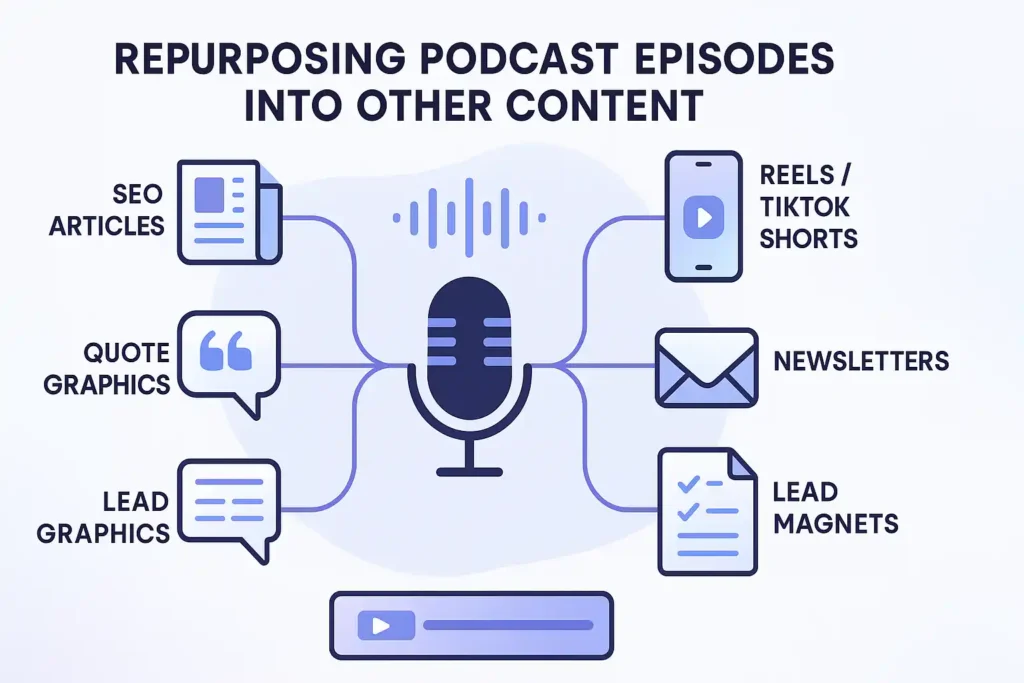
Podcast episodes can be repurposed into multiple content formats to extend their reach and impact. For example, you can turn episodes into blog posts, social media snippets, quote graphics, or short videos. This strategy not only maximizes the value of each episode but also helps drive traffic, increase engagement, and reinforce your brand message across different channels without creating entirely new content from scratch..
Repurposing podcast clips into Reels and Shorts can significantly amplify reach, especially when using social platforms strategically similar to the skills needed to become a high-demand social media manager.
Blog Posts & SEO Articles from Transcripts
Transcribe your podcast episodes
Clean up the text
Turn each episode into a search-optimized blog post
This helps you rank for keywords while reusing the same ideas you already covered in audio.
Short Clips & Reels for Social Media
If you record video (or even just use audiograms), you can create:
15–60 second clips for Instagram Reels, TikTok, YouTube Shorts
Snippets for LinkedIn, Twitter/X, Facebook
These clips tease the episode and drive people to listen to the full version.
Quote Graphics, Carousels & Email Newsletters
From each episode you can pull:
Key quotes for image posts
Bullet-point summaries for a carousel
A quick breakdown of “3 key takeaways” for your email newsletter
This gives your audience multiple ways to consume the same core message.
Lead Magnets, Checklists and Guides
Turn multi-step or educational episodes into:
PDF guides
Checklists
Templates
Offer them as lead magnets in exchange for email signups.
Measuring Podcasting Success in Content Marketing
To measure podcasting success in content marketing, track key metrics such as downloads, listener retention, engagement, and subscriber growth. Additionally, monitor how podcasts influence website traffic, social media engagement, and lead generation. Evaluating these metrics helps determine which episodes resonate most with your audience, optimize content strategy, and demonstrate the overall ROI of podcasting within your marketing efforts.
Key Metrics to Track
Don’t just look at total downloads. Track:
Downloads/streams per episode
Subscribers/followers
Listener retention and completion rate
Average listens over 30/60/90 days
This helps you see which topics and formats work best.
Traffic and Conversions from Podcast CTAs
To measure results, use:
Unique landing page URLs mentioned only on the podcast
UTM links in show notes
Special discount codes for listeners
Now you can see how many website visits, leads, or sales come from podcast listeners.
Qualitative Feedback and Community Signals
Look beyond numbers too:
Reviews and ratings
DMs and replies
Social media comments
Email responses
These tell you how deeply your podcast is resonating with your audience. Since podcast titles and descriptions can show up in voice assistants and smart speakers, understanding voice search optimization can help improve podcast discoverability.
Common Mistakes Brands Make With Podcasting
Many brands make mistakes when using podcasting as part of their content strategy. Common errors include failing to define a clear target audience, producing inconsistent episodes, and creating content that lacks value or relevance.
Other pitfalls include poor audio quality, ignoring promotion, and not measuring results, which can limit engagement and ROI. Avoiding these mistakes ensures your podcast builds trust, grows your audience, and effectively supports your marketing goals.
Treating It Like a One-Off Campaign
Podcasting works best as a consistent series, not a 3-episode “experiment.” Quitting too early is one of the biggest reasons brands never see results.
Publishing Irregularly or Inconsistently
If episodes drop randomly, people stop expecting them. Pick a schedule you can stick to weekly, bi-weekly, or even monthly and be consistent.
Making Every Episode a Hard Sell
If your podcast feels like a constant commercial, listeners will bail. Focus 80–90% on value, 10–20% on promotion.
Ignoring Audio Quality and Basic Editing
You don’t need a fancy studio, but you do need:
A decent microphone
Clear audio (no crazy background noise)
Basic editing to remove long pauses or major mistakes
Good audio quality makes your brand sound more professional.
Not Promoting Episodes Across Other Channels
Publishing is only half the job. Promote episodes via:
Email
Social media
Website banners or pop-ups
Guest cross-promotion
If you don’t promote, people won’t magically find your show.
Simple Steps to Start a Podcast for Content Marketing

Start a podcast for content marketing by defining your audience and goals, planning your topics and schedule, using good recording equipment, and promoting episodes across social media and your website to maximize reach and engagement.
1.Plan
Define your audience, niche, and show format
Outline 10–20 episode ideas before launching
2. Gear
Start with a USB mic, headphones, and free or low-cost recording software
3. Record & Edit
Aim for clear, conversational episodes
Edit out distractions, not your personality
4. Publish & Distribute
Use a podcast host (e.g., Buzzsprout, Libsyn, etc.)
Distribute to Spotify, Apple Podcasts and other major platforms
5. Promote
Share each episode through email, socials, your blog, and your guests’ networks
Is Podcasting the Right Channel for Your Brand?
Podcasting can be a powerful channel, but it’s important to evaluate if it fits your brand and audience. Consider whether your target audience consumes audio content, if you have valuable insights or stories to share, and whether you can commit to consistent episodes.
Podcasting works best for brands looking to build authority, foster engagement, and create a personal connection with listeners, but it requires strategy, quality content, and promotion to deliver meaningful results.
For product-based brands, podcasts can help educate buyers and highlight solutions supporting content like how to find the perfect product.
Podcasting is especially powerful for:
B2B brands that need to educate and build trust
Coaches, consultants, and agencies
SaaS and tech products with complex use case
Creators and educators who have a lot to teach
Any brand built around expertise, stories, or community
If you:
Have valuable knowledge
Can talk about your topic regularly
Are willing to play the long game
then podcasting can become one of your most effective content marketing channels.
Final Thoughts
Podcasting is more than a marketing trend; it’s a long-term content asset that can build brand authority, nurture audience loyalty, and generate ongoing engagement. Unlike temporary campaigns, podcast episodes remain accessible over time, providing evergreen value that can attract new listeners and reinforce your brand message. By consistently producing high-quality, relevant episodes and repurposing them across other channels, brands can create a lasting impact and a sustainable marketing resource that continues to deliver results.