
Voice search has become one of the fastest-growing trends in digital technology, reshaping how users interact with devices and how brands approach SEO. With the rise of virtual assistants like Siri, Google Assistant, Alexa, and Cortana, voice search has evolved from a convenience feature to a mainstream search behavior.
As of 2025, more than half of all online queries are estimated to be voice-driven, and this shift continues to grow as smart speakers, voice-enabled home devices, and hands-free browsing become a part of everyday life.
The key reason behind this surge is simple: voice search is faster, more natural, and more accessible. Speaking a question takes less time than typing it, making voice queries ideal for users who are multitasking, driving, cooking, or using mobile devices.
This change in search behavior means businesses must rethink their SEO strategies to remain visible in a voice-first world.To understand why voice search impacts rankings so deeply, it also helps to know how search engines work.
What Is Voice Search?

Voice search is a technology that allows users to speak their queries out loud instead of typing them into a search engine. Using artificial intelligence, natural language processing (NLP), and speech recognition, devices like smartphones, smart speakers, and virtual assistants (Google Assistant, Siri, Alexa, and Cortana) can understand spoken language and deliver accurate, real-time answers.
Unlike traditional typed searches which are often short and keyword-focused voice searches are naturally conversational. People tend to ask complete questions such as:
“What’s the best restaurant near me?”
“How do I fix my Wi-Fi connection?”
“What is the weather like today?”
“Who invented the lightbulb?”
This shift from short, typed keywords to longer, spoken, question-based queries has changed how search engines interpret intent and deliver results. Voice search is designed to mimic human conversation, making search faster, more intuitive, and more accessible for people on the go, multitasking, or using hands-free devices.
As voice-enabled technology continues to expand, understanding what voice search is and how it differs from traditional search has become essential for modern SEO and digital marketing strategies. For beginners, this SEO starter guide is a great foundation before mastering voice SEO.
Why Voice Search Matters for SEO in 2025
Voice search isn’t just a trend, it’s transforming how content is delivered and consumed. Unlike traditional text-based searches, voice queries are longer, more conversational, and intent-driven. Users often ask complete questions, expecting direct, concise answers. This shift has major implications for SEO:
Conversational search is replacing short keywords.
Instead of typing “best shoes,” users say, “What are the best running shoes for flat feet?”
Voice queries are heavily question-based.
More searches now begin with “who,” “what,” “when,” “where,” “why,” and “how.”
Voice users expect faster, clearer results.
Voice assistants usually read answers from featured snippets, meaning only one page gets the traffic.
Local searches are booming.
Searches like “near me” or “closest restaurant” have skyrocketed due to hands-free mobile behavior.
For these reasons, optimizing for voice search is critical for maintaining rankings, improving visibility, and capturing the new generation of search users.
Understanding How Voice Search Works
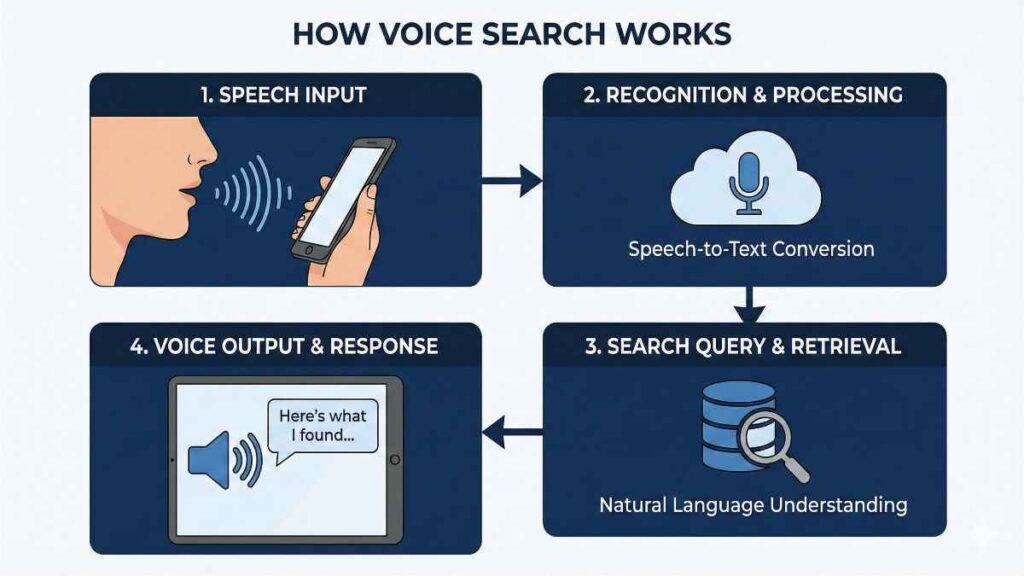
Natural Language Processing (NLP)
Voice search relies heavily on NLP, the technology that allows AI to understand human speech. Instead of focusing purely on keywords, NLP interprets intent, context, and sentence structure. For example, it knows “Where can I find a good dentist near me?” means the user wants a local dental service, not a definition of “dentist.”
Machine Learning and AI
Voice assistants use machine learning to improve accuracy over time. Each interaction helps the algorithm refine its understanding of language patterns, accents, behavior, and preferences. This means content must be clear, structured, and relevant so AI tools can detect it as the best possible answer.
Localized Voice Queries
Most voice searches are local. Users often want directions, business hours, or suggestions nearby. This makes local SEO more important than ever for voice-driven visibility.
Key Differences Between Voice Search SEO and Traditional SEO
Voice search fundamentally differs from traditional SEO in several ways:
Queries are complete sentences, not keywords.
Example typed: “weather New York”
Example voice: “What’s the weather like in New York today?”
Search intent is much stronger.
Voice users expect an immediate, direct answer to a question.
One result usually wins.
Text-based search shows multiple results; voice search typically reads ONE answer to the featured snippet.
Structured data matters more.
Schema markup helps search engines understand content quickly and accurately.
Understanding these differences helps businesses adapt their SEO strategies accordingly. If you want to go deeper into the technical side, this guide explains why technical SEO is important.
How to Optimize Your Website for Voice Search
Target Conversational, Long-Tail Keywords
Voice queries are natural and human-like. Instead of optimizing for short phrases, target questions and conversational terms that mimic real speech.
Examples:
“How do I choose the best mattress for back pain?”
“What is the best way to clean white sneakers?”
“Where can I find the cheapest car insurance near me?”
Tools like AnswerThePublic, Google’s “People Also Ask,” and AI-generated question tools help identify voice-friendly queries.
Create Voice-Friendly Content
Content for voice search should be:
Easy to read
Written in simple language
Structured in short answers (40–50 words works well)
Formatted using headers, bullets, and FAQ sections
Aim to answer user questions directly at the top of the section and elaborate after. Strong storytelling also helps content stand out and rank better; here’s how it elevates content marketing.
Optimize for Featured Snippets (Position Zero)
To win voice search, you must aim for featured snippets, because Google often pulls voice answers from these.
Tips to increase snippet eligibility:
Define topics clearly (“What is voice search optimization?”)
Use bullet points and numbered lists
Keep answers short and authoritative
Write structured, scannable paragraphs
Improve Page Speed and Core Web Vitals
Voice search users expect near-instant answers. Slow websites are unlikely to be chosen by voice assistants.
Optimize:
Page load time
Server response time
Mobile responsiveness
Image compression
Code minification
Fast sites = higher voice search ranking potential.
Local SEO Optimization (Extremely Important)
Since voice users frequently search “near me,” local optimization is essential.
Key strategies:
Create and optimize Google Business Profile
Use local keywords naturally in content
Keep name, address, phone number (NAP) consistent
Encourage customer reviews
Add “Open now,” “Near me,” and city-based intent content
Local SEO is one of the strongest ranking signals for voice assistants.
The Role of Structured Data in Voice Search Success

Search engines rely on structured data (schema markup) to understand and categorize content.
Recommended schema types:
FAQPage
HowTo
LocalBusiness
Product
Article
Schema helps voice assistants quickly extract the most relevant information and improves chances of being selected as the spoken result.
Mobile Optimization for Voice Search
Most voice searches happen on mobile devices, making mobile SEO non-negotiable.
Ensure your site has:
Responsive design
Fast loading
Simple navigation
Easy-to-read fonts
No intrusive pop-ups
Think mobile-first, not desktop-first.
How E-commerce Businesses Can Benefit from Voice Search
Voice shopping is becoming increasingly common, especially for reorders, quick purchases, and common queries like:
“What’s the best price for…?”
“Where can I buy…?”
“Show me the top-rated…”
E-commerce sites should optimize product descriptions, add review schema, and target question-based keywords.
Common Mistakes to Avoid in Voice Search SEO
Voice search is becoming increasingly popular with smart devices and virtual assistants like Siri, Alexa, and Google Assistant. Optimizing your content for voice search can improve traffic and user engagement. However, many businesses make mistakes that prevent them from taking full advantage of this technology.
Keyword stuffing
Writing overly formal content
Ignoring FAQ pages
No schema markup
Slow page speed
Poor mobile design
These errors can significantly lower voice search ranking potential.
Future Trends in Voice Search (2025 and Beyond)
Voice technology is evolving fast. Expected trends include:
More personalized responses powered by AI
Increased home automation voice commands
Voice search integration in vehicles
Advances in emotion-recognition technology
Wider adoption in e-commerce and healthcare
Voice search is becoming more intuitive, more accurate, and more embedded in daily life.
Final Thoughts
Voice search is transforming the SEO landscape. As more users move toward conversational search, smart speakers, and AI-driven assistants, businesses must adapt their content strategies. The future of search is hands-free, intuitive, and conversational and brands that embrace voice SEO early will lead the next wave of digital visibility.
Optimizing for voice search isn’t an option anymore, it’s a necessity. Focus on conversational keywords, clear answers, structured content, local SEO, and technical performance to stay ahead in a voice-first world.
FAQ
What is voice search optimization?
It’s the process of improving content so voice assistants can read it aloud as the best possible answer.
Is voice search replacing traditional SEO?
No, but it’s becoming an essential extension of modern SEO.
Do featured snippets matter for voice search?
Yes. Voice assistants pull most answers from featured snippets.
Who benefits most from voice search SEO?
Local businesses, e-commerce brands, publishers, and service providers.