
Social media has fundamentally changed how businesses interact with their customers. What once served mainly as a promotional tool has now evolved into a powerful customer service channel. As digital behavior shifts, customers increasingly expect brands to be responsive, transparent, and accessible on social platforms making social media an essential part of modern customer service strategies.
For businesses already investing in digital marketing tactics, integrating customer service into social media creates a seamless brand experience that supports long-term growth and trust.
What Is Social Media Customer Service?

Social media customer service involves assisting customers, resolving issues, and answering questions through platforms like Facebook, Instagram, X (Twitter), LinkedIn, and WhatsApp. Instead of relying solely on traditional channels, brands can now engage customers directly where they spend most of their time online.
This approach complements broader digital strategies such as SEO in digital marketing, ensuring brands remain visible, accessible, and customer-focused across search engines and social platforms.
How Social Media Enhances Customer Service
Faster Response Times
Social media allows real-time communication, enabling businesses to respond quickly to customer concerns. Faster responses reduce frustration, improve satisfaction, and prevent issues from escalating publicly.
Understanding how search engines work also highlights why fast, helpful responses matter and active engagement signals brand credibility and relevance across digital platforms.
Improved Customer Engagement
Unlike traditional support channels, social media enables two-way conversations. Customers can comment, message, or tag brands, while businesses respond in a more human and conversational tone.
Strong engagement is often driven by effective storytelling in content marketing, helping brands turn routine support interactions into memorable experiences.
Increased Accessibility and Convenience
Social media removes barriers by allowing customers to reach brands anytime, anywhere. Many users prefer messaging a brand instead of waiting on calls or emails, especially on mobile devices.
This accessibility is one reason why becoming a high-demand social media manager now requires customer service expertise alongside content creation skills.
Personalized Customer Interactions
Social platforms provide insights into customer behavior, preferences, and history, enabling personalized responses. Tailored communication makes customers feel valued and strengthens loyalty.
Brands that understand how to become a successful content creator often excel here, blending creativity with empathy to deliver meaningful interactions.
Key Benefits of Using Social Media for Customer Support
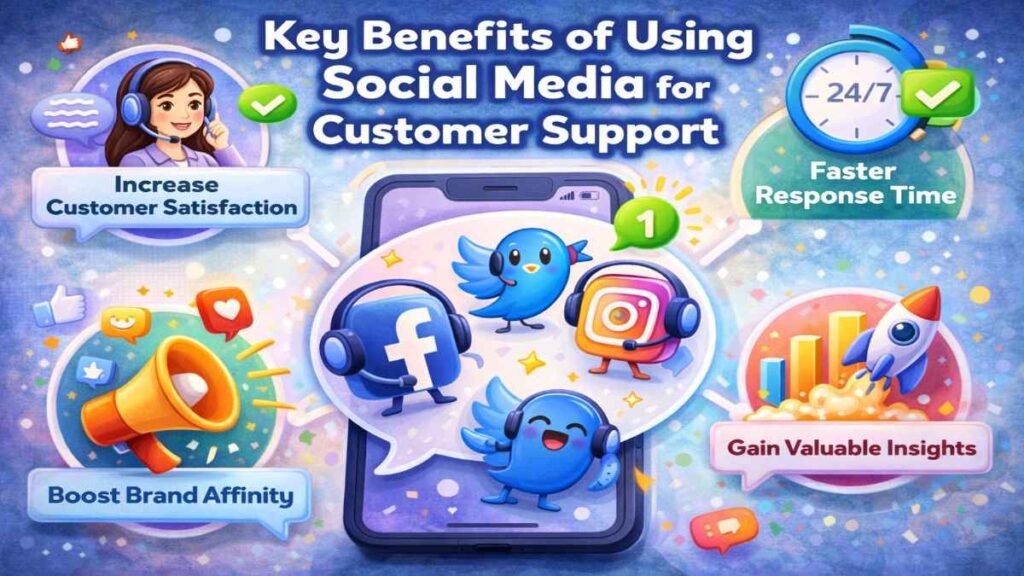
Using social media for customer service improves brand transparency, builds trust, and enhances public perception. When issues are resolved openly, potential customers can see how responsibly a brand handles challenges.
These benefits align with long-term digital marketing tactics focused on retention, reputation, and relationship-building rather than short-term conversions.
Effective Social Media Customer Service Strategies
Active Monitoring and Social Listening
Monitoring mentions, comments, and messages ensures no customer concern goes unnoticed. Social listening tools help brands detect issues early and respond proactively.
This proactive approach supports technical performance as well, similar to why technical SEO is important for maintaining a strong digital foundation.
Using Chatbots and Automation
Chatbots provide instant responses to common questions and improve efficiency outside business hours. Automation enhances scalability while allowing human agents to focus on complex issues.
Automation works best when paired with strategic content and design principles, such as proven graphic designing techniques that enhance clarity and usability.
Managing Complaints and Crisis Situations
Public complaints require calm, professional handling. Addressing issues transparently can turn negative experiences into positive brand moments and demonstrate accountability.
Brands that clearly understand how to find the perfect product are often better equipped to resolve complaints, as they know customer expectations deeply.
Best Social Media Platforms for Customer Service
Each platform serves a different purpose. Facebook Messenger and WhatsApp are ideal for private support, X (Twitter) is effective for rapid responses, while Instagram and LinkedIn support engagement-driven inquiries.
Expanding into formats like audio can also strengthen customer relationships, which is why podcasting is emerging as a powerful content marketing channel for deeper brand connection.
Challenges of Social Media Customer Service
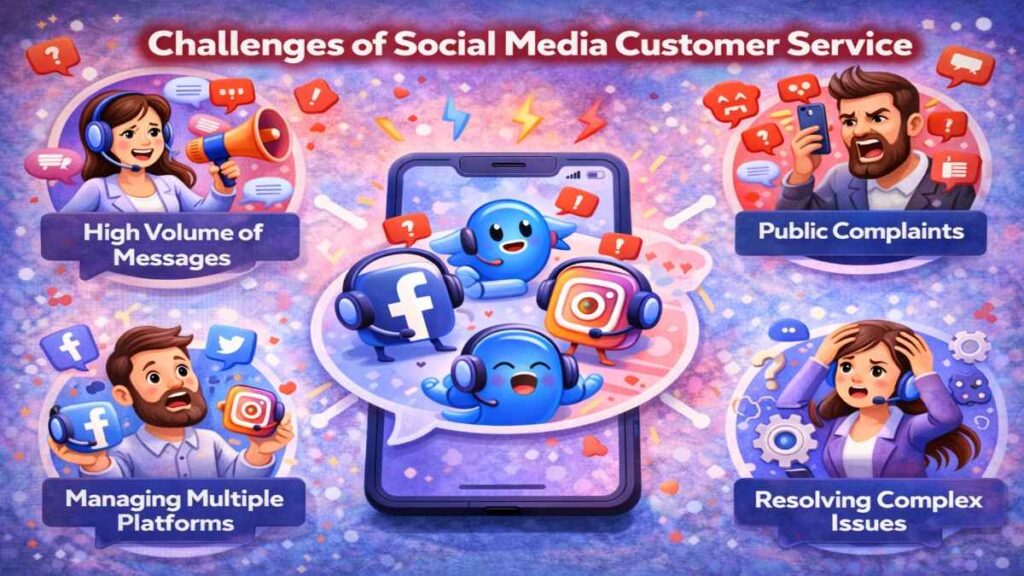
Despite its advantages, social media customer service can be demanding. Managing high volumes of messages, maintaining a consistent tone, and handling public criticism require trained teams and clear processes.
Without alignment between content, SEO, and customer support, brands risk damaging credibility especially in competitive digital spaces.
Best Practices for Social Media Customer Service in 2025
Successful brands set clear response-time expectations, train teams in empathy and communication, and integrate CRM tools with social platforms. Consistency across channels ensures a unified customer experience.
Combining customer service with SEO fundamentals such as those outlined in a technical SEO strategy helps brands remain discoverable and trustworthy.
Measuring Social Media Customer Service Success
Key performance indicators include response time, resolution rate, customer satisfaction, and sentiment analysis. These metrics provide actionable insights to refine service strategies and improve outcomes.
Tracking performance also supports broader SEO and content goals, reinforcing brand authority and engagement.
Future Trends in Social Media Customer Service
The future of social media customer service lies in AI-driven support, predictive assistance, and omnichannel integration. Businesses will increasingly blend automation with human interaction to meet rising customer expectations.
Brands that align customer service with SEO, content marketing, and emerging channels will maintain a competitive edge.
Conclusion
Social media enhances customer service by enabling faster responses, deeper engagement, and greater accessibility. When used strategically, it strengthens brand trust, improves customer satisfaction, and supports long-term growth. As digital expectations evolve, social media will remain a cornerstone of effective customer service strategies.
FAQs
How does social media enhance customer service?
Social media enhances customer service by enabling faster responses, real-time communication, personalized support, and improved customer engagement across digital platforms.
Why is social media important for customer support?
Social media is important because customers expect quick, convenient support on platforms they already use, helping brands build trust and improve satisfaction.
Which social media platforms are best for customer service?
Facebook Messenger, WhatsApp, and X (Twitter) are widely used for customer service due to their messaging features and real-time interaction capabilities.
Can small businesses use social media for customer service?
Yes, social media is a cost-effective customer service solution for small businesses, allowing direct communication without large support teams.
What are the challenges of social media customer service?
Challenges include managing high message volumes, handling public complaints, maintaining consistent responses, and balancing automation with human support.