
In today’s crowded digital world, consumers are exposed to thousands of marketing messages every single day. Product features, pricing, and promotions alone are no longer enough to stand out. What truly captures attention and builds long-lasting relationships is emotion. This is why emotional storytelling has become one of the most powerful tools in modern branding.
Brands that successfully use emotional stories don’t just sell products; they create meaning, build trust, and form deep connections with their audience. But how exactly do brands use emotional stories to connect with people on such a powerful level? Let’s explore the strategy, psychology, techniques, and future of emotional storytelling in branding.
This is why emotional storytelling has become one of the most powerful tools in modern branding, as it shows how storytelling elevates content marketing beyond traditional promotion.
What Is Emotional Storytelling in Branding?
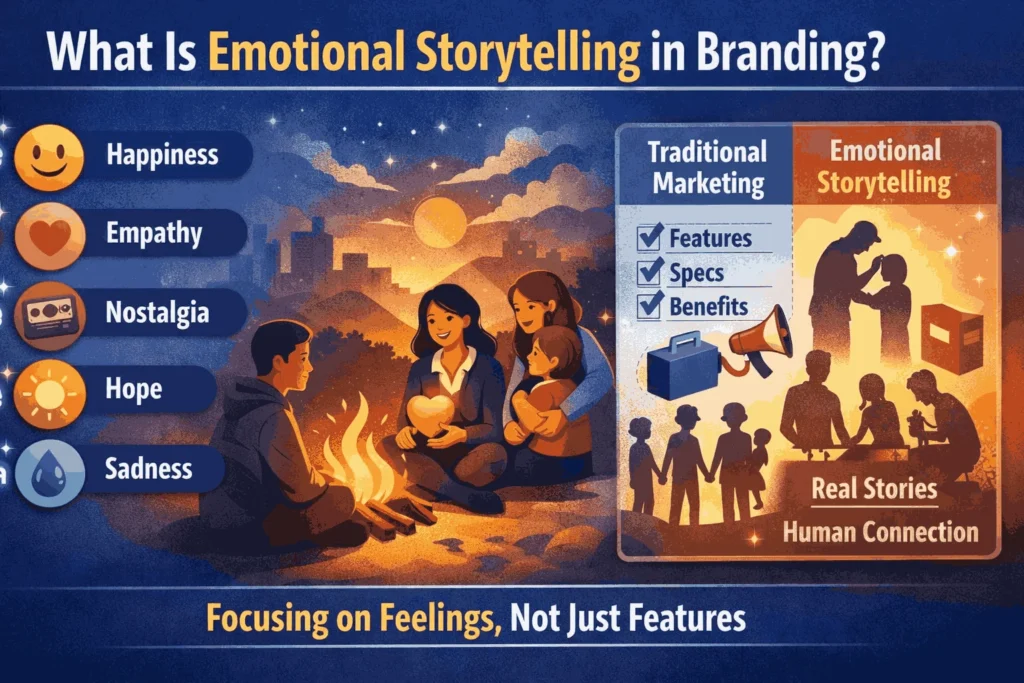
Emotional storytelling in branding is the practice of using narratives that evoke feelings such as happiness, empathy, nostalgia, hope, or even sadness to communicate a brand’s values, mission, or purpose. Instead of focusing on what a product does, emotional storytelling focuses on how it makes people feel.
Traditional marketing often highlights features, specifications, and benefits. Emotional storytelling, on the other hand, places humans at the center of the message. It shows real experiences, struggles, victories, and values that audiences can relate to.
At its core, emotional storytelling answers one key question for consumers:
“Why should I care?”
Why Emotional Stories Are So Powerful for Brands
1. Emotions Drive Decision-Making
Contrary to popular belief, most purchasing decisions are emotional first and rational second. People often justify purchases with logic, but emotions are what trigger the initial desire. Emotional stories tap directly into this process.
2. Stories Are Easier to Remember
Facts and statistics fade quickly, but stories stay with us. When information is presented in a narrative format, the brain processes it more deeply, making it easier to remember and recall later.
3. Emotional Connections Build Trust
Trust is built when people feel understood. Emotional storytelling shows empathy and authenticity, helping brands appear more human and relatable rather than corporate and distant.
4. Emotional Branding Increases Loyalty
Customers who feel emotionally connected to a brand are more likely to stay loyal, recommend it to others, and forgive occasional mistakes.
Types of Emotional Stories Brands Use
Inspirational Stories
Inspirational stories focus on growth, resilience, and achievement. These stories often highlight overcoming obstacles or achieving success against the odds. They motivate audiences and associate the brand with empowerment and progress.
Why they work:
They inspire hope and ambition, making the audience feel capable and motivated.
Relatable Human Stories
These stories reflect everyday life challenges, routines, relationships, and emotions that feel familiar. They make brands feel approachable and real.
Why they work:
People connect more easily with stories that mirror their own experiences.
Purpose-Driven Stories
Purpose-driven stories focus on values, ethics, and impact. They communicate what the brand stands for beyond profits, such as sustainability, inclusion, or social responsibility.
Why they work:
Modern consumers prefer brands that align with their beliefs and values.
Nostalgic Stories
Nostalgic storytelling taps into memories from the past childhood moments, shared cultural experiences, or earlier times in life.
Why they work:
Nostalgia creates warmth, comfort, and emotional depth, strengthening attachment to the brand.
How Emotional Stories Help Brands Connect With Their Audience
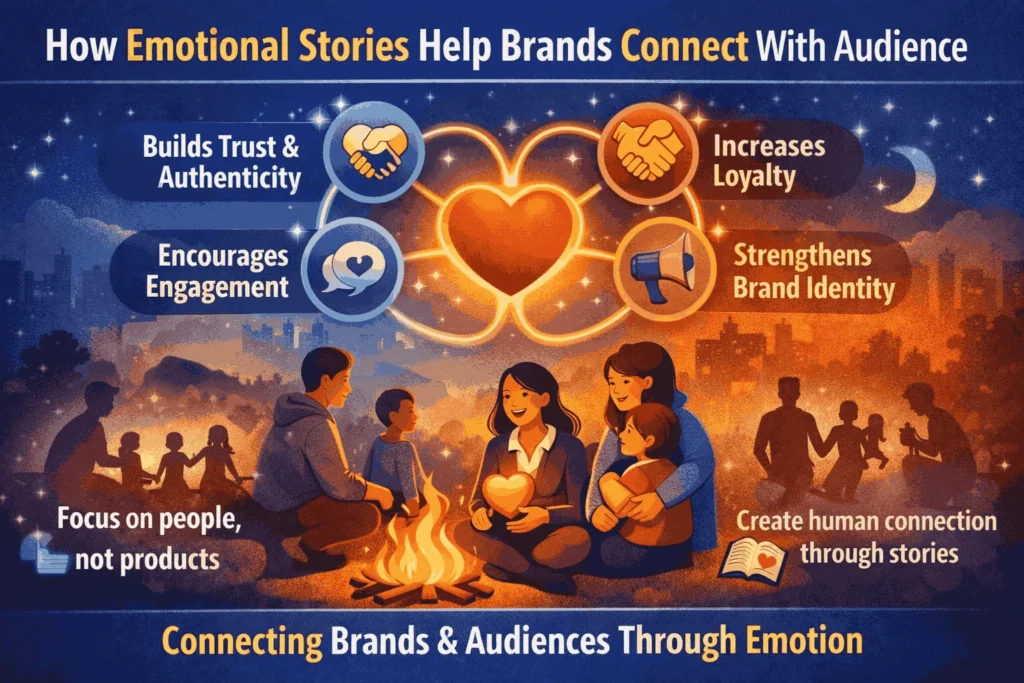
Builds Emotional Trust
When a brand tells honest and meaningful stories, it signals transparency. Audiences are more likely to trust brands that show vulnerability and authenticity.
Humanizes the Brand
Storytelling shifts the focus from logos and slogans to people and experiences. This human touch makes brands easier to relate to and remember.
Encourages Engagement
Emotional stories invite interaction likes, comments, shares, and discussions. People are far more likely to engage with content that makes them feel something.
Strengthens Brand Identity
Consistent emotional storytelling reinforces what a brand stands for, helping audiences understand its personality and values.
The Psychology Behind Emotional Storytelling
Emotional storytelling works because of how the human brain processes information.
Mirror neurons activate when we see others experiencing emotions, making us feel those emotions ourselves.
Oxytocin, often called the “bonding hormone,” is released during emotionally engaging stories, increasing trust and empathy.
Emotional memory is stronger than factual memory, meaning emotionally charged messages are remembered longer.
By triggering these psychological responses, brands create deeper and more lasting connections.
Key Elements of a Strong Emotional Brand Story
Authenticity
Audiences can sense when emotions are forced or fake. Authentic stories are grounded in truth and align with the brand’s real actions and values.
Relatable Characters
Strong stories feature people the audience can identify with customers, employees, or community members.
Conflict or Challenge
Every compelling story includes a challenge or problem. Conflict creates tension and keeps the audience engaged.
Emotional Resolution
The story should lead to a meaningful resolution, whether it’s hope, joy, relief, or inspiration.
Consistent Brand Voice
The emotional tone should align with the brand’s overall personality across all platforms.
Creating authentic emotional stories requires the same skills taught in guides on becoming a successful content creator, including authenticity, consistency, and audience understanding.
Platforms Where Brands Share Emotional Stories
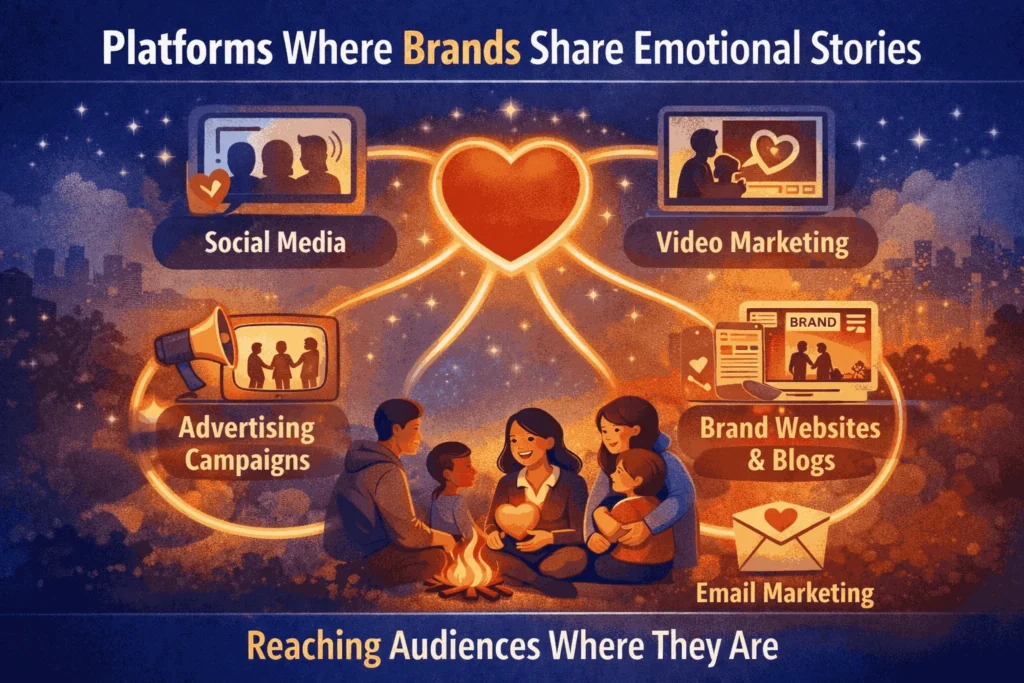
Social Media
Short-form emotional storytelling thrives on social platforms through videos, reels, captions, and user-generated content.
Video Marketing
Video is one of the most powerful mediums for emotional storytelling because it combines visuals, sound, and narrative.
Brand Websites and Blogs
Longer stories, case studies, and brand journeys can be shared in-depth on websites and blogs.
Email Marketing
Personalized emotional stories in emails can create a strong one-on-one connection with subscribers.
Advertising Campaigns
Emotion-driven ads often outperform purely informational ones, especially when they focus on people rather than products.
Emotional storytelling is now a core part of modern digital marketing tactics, helping brands stand out across social media, video, and email campaigns.
Examples of Emotional Storytelling in Branding (Generalized)
Many successful brands focus on:
Customer success stories instead of product specs
Employee journeys to show company culture
Community impact stories to highlight values
Life moments where the brand plays a meaningful role
These approaches make audiences feel included in the brand’s story.
Common Mistakes Brands Make With Emotional Storytelling
Forced Emotions
Overly dramatic or exaggerated emotions can feel manipulative and damage trust.
Ignoring Audience Values
A story that doesn’t align with the audience’s beliefs can backfire.
Lack of Consistency
Inconsistent storytelling confuses audiences and weakens brand identity.
Focusing Only on the Brand
Stories should center on people, not just the brand itself.
How to Create an Emotional Brand Story (Step-by-Step)
Step 1: Understand Your Audience
Know their challenges, desires, fears, and values. Emotional stories must start with audience insight.
Step 2: Define Your Core Values
Clarify what your brand stands for and what emotions you want to evoke.
Step 3: Choose the Right Emotion
Decide whether the story should inspire, comfort, motivate, or empathize.
Step 4: Keep the Story Simple
Clear and focused stories are more impactful than complex ones.
Step 5: Show, Don’t Tell
Use real experiences and visuals instead of abstract claims.
Step 6: Measure Emotional Impact
Track engagement, sentiment, and feedback to understand how the story resonates.
How Emotional Storytelling Impacts Brand Loyalty and Sales
Emotionally connected customers are:
More loyal
Less price-sensitive
More likely to recommend the brand
More forgiving of mistakes
While emotional storytelling may not always lead to immediate conversions, it builds long-term brand equity and trust that drives sustainable growth.
Beyond emotional impact, storytelling also supports visibility when combined with strong SEO in digital marketing, helping brands attract and retain the right audience.
The Future of Emotional Storytelling in Branding
Personalization Through Data and AI
Brands will increasingly use data to deliver personalized emotional stories tailored to individual preferences.
Interactive Storytelling
Audiences will participate in brand stories through polls, comments, and immersive experiences.
Community-Driven Stories
User-generated content and community voices will play a bigger role in authentic storytelling.
Values-Based Branding
Purpose and social impact will continue to shape emotional narratives as consumers demand accountability.
Conclusion
Emotional storytelling is no longer optional, it is essential. In a world where consumers crave authenticity and connection, brands that tell meaningful emotional stories stand out, build trust, and create lasting relationships.
By focusing on people instead of products, values instead of features, and emotions instead of transactions, brands can transform audiences into loyal communities. Emotional stories don’t just connect brands with their audience they make brands unforgettable.
FAQs
Emotional branding focuses on building emotional connections between brands and consumers through feelings, values, and experiences.
Storytelling makes messages more memorable, relatable, and emotionally engaging.
Yes. Authentic emotional stories often work even better for small brands.
Common effective emotions include trust, happiness, empathy, hope, and nostalgia.
While it may not drive instant sales, it significantly boosts long-term loyalty and brand value.