
Artificial Intelligence (AI) is no longer a futuristic concept, it is the backbone of modern digital marketing. By 2026, AI has fundamentally changed how brands attract, engage, and convert customers. From hyper-personalized content to predictive analytics and automated campaigns, AI is helping marketers work smarter, faster, and more efficiently than ever before.
AI-Powered Personalization at Scale
Personalization has moved far beyond using a customer’s first name in emails. In 2026, AI analyzes browsing behavior, purchase history, location, and real-time interactions to deliver highly personalized experiences across websites, ads, and email campaigns.
AI systems can dynamically change content, product recommendations, and offers for each user in real time. This level of personalization improves engagement, increases conversion rates, and builds long-term customer loyalty.
Why it matters:
Customers now expect brands to understand their needs instantly and AI makes that possible at scale.
Marketing Automation Driven by Artificial Intelligence
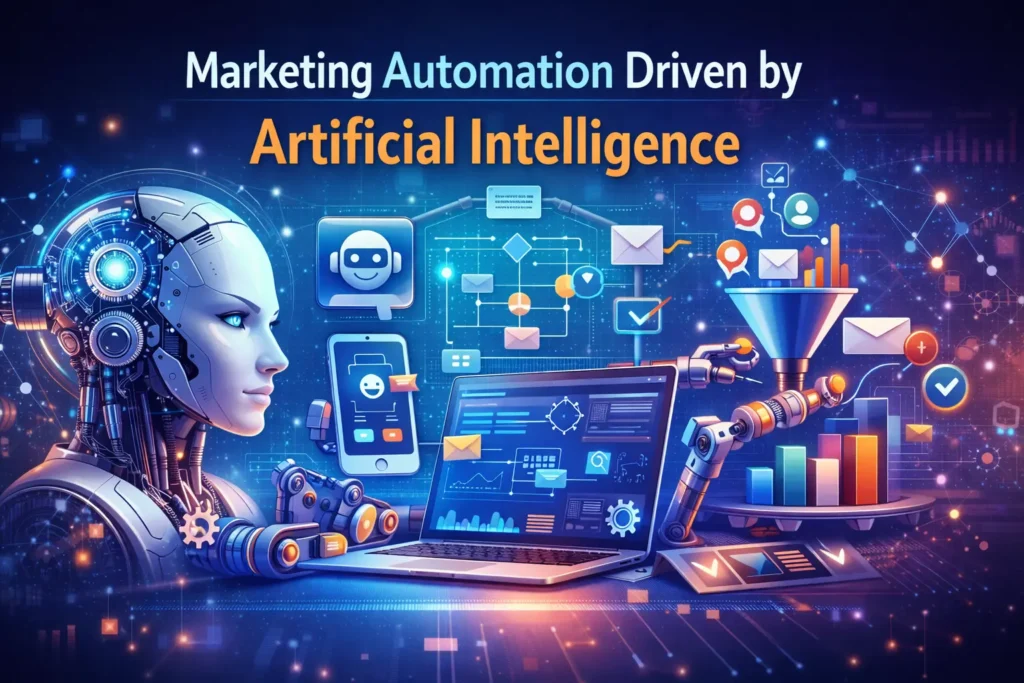
AI-powered automation has replaced manual workflows in many areas of digital marketing. From scheduling campaigns to nurturing leads, AI tools now manage complex processes with minimal human input.
In 2026, AI-driven marketing automation platforms can:
Segment audiences automatically
Score leads based on behavior and intent
Optimize email send times for maximum engagement
Adjust campaigns in real time based on performance
This allows marketers to focus on strategy and creativity while AI handles execution and optimization.
Artificial Intelligence in SEO and Search Marketing
Search engine optimization has evolved rapidly with AI-powered search algorithms. In 2026, AI tools help marketers understand search intent, semantic keywords, and user behavior more accurately than traditional keyword research methods.
AI improves SEO by:
Identifying high-intent keyword opportunities
Optimizing content for voice and conversational search
Analyzing competitor strategies
Improving on-page SEO and content structure
As search engines increasingly rely on AI, marketers must also adopt AI-driven SEO strategies to remain visible.
Predictive Analytics and Smarter Decision Making
One of the biggest advantages of AI in digital marketing is predictive analytics. AI systems analyze massive amounts of data to forecast trends, customer behavior, and campaign performance before decisions are made.
In 2026, marketers use predictive analytics to:
Anticipate customer needs
Predict churn and retention risks
Optimize ad budgets
Forecast ROI with greater accuracy
This data-driven approach reduces guesswork and leads to more confident marketing decisions.
AI Chatbots and Conversational Marketing
AI chatbots have become a standard feature on websites, social media platforms, and messaging apps. In 2026, chatbots are more human-like, context-aware, and capable of handling complex customer interactions.
They are used for:
24/7 customer support
Lead qualification
Product recommendations
Appointment booking
Conversational marketing powered by AI improves response times, enhances customer experience, and increases lead conversion rates.
AI in Paid Advertising and Campaign Optimization
Paid advertising has been transformed by AI-driven bidding and targeting strategies. Platforms now use machine learning to optimize ads automatically based on user behavior and performance data.
AI helps advertisers by:
Identifying high-converting audiences
Adjusting bids in real time
Running automated A/B tests
Improving return on ad spend (ROAS)
In 2026, successful paid campaigns rely heavily on AI for precision targeting and budget efficiency.
AI-Generated Content and Creative Optimization
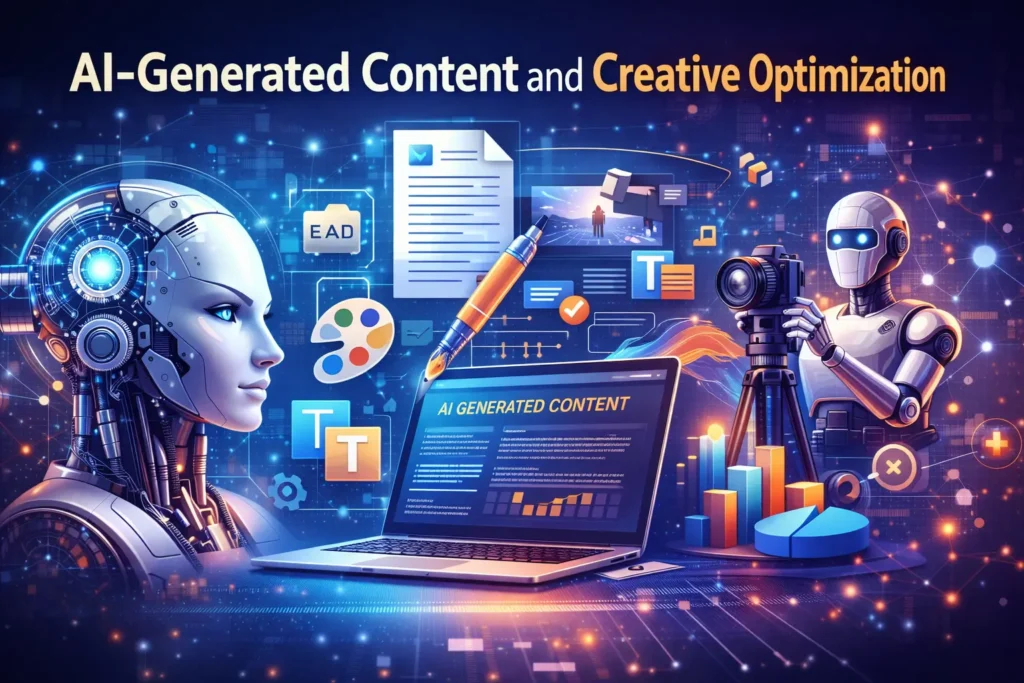
AI-generated content has become a powerful tool for marketers. AI assists with blog writing, ad copy, video scripts, image creation, and social media posts.
However, in 2026, the most effective strategies combine AI efficiency with human creativity. AI handles research, drafts, and optimization, while humans ensure originality, emotional connection, and brand voice consistency.
Ethical content creation and transparency remain critical as AI-generated content becomes more common.
Customer Experience and Journey Optimization
AI enables businesses to map and optimize the entire customer journey across multiple touchpoints. From first interaction to post-purchase engagement, AI tracks and improves every stage.
Benefits include:
Seamless omnichannel experiences
Personalized customer journeys
Higher customer lifetime value
Reduced churn
AI ensures that customers receive the right message at the right time on the right platform.
Ethical, Privacy, and Trust Challenges
With increased AI usage comes greater responsibility. In 2026, data privacy, transparency, and ethical AI practices are top priorities for marketers.
Businesses must:
Comply with data protection regulations
Use customer data responsibly
Be transparent about AI usage
Avoid biased or misleading algorithms
Building trust is just as important as leveraging technology.
The Future of Digital Marketing With AI
Looking ahead, AI will continue to evolve and integrate deeper into digital marketing strategies. Marketers who adapt early, invest in AI skills, and prioritize ethical practices will gain a competitive edge.
In 2026 and beyond, AI is not replacing marketers, it is empowering them to achieve better results with greater efficiency.
Conclusion
Artificial intelligence is transforming digital marketing in 2026 by enabling smarter personalization, automation, analytics, and customer engagement. Businesses that embrace AI-driven strategies are better positioned to scale, compete, and thrive in an increasingly digital world.
The future of marketing belongs to those who combine AI technology with human insight and creativity.
FAQs
AI is used for personalization, automation, predictive analytics, SEO, chatbots, content creation, and ad optimization.
No. AI enhances marketing efficiency, but human creativity, strategy, and decision-making remain essential.
Many AI marketing tools are affordable and scalable, making them accessible to small and medium-sized businesses.
Yes, if used responsibly. Content should be helpful, original, and reviewed by humans to meet quality standards.
Marketers should focus on AI tools, data analysis, strategic thinking, creativity, and ethical marketing practices.