
As digital landscapes evolve, so do audience expectations. In 2025, graphic design is no longer limited to aesthetics; it has become a strategic branding tool that shapes brand identity, strengthens customer engagement, and drives business performance.
With competition at an all-time high, brands must adopt innovative design techniques, impactful visuals, and modern graphic design trends to stand out.
The Growing Importance of Visual Impact in 2025
Consumers today interact with hundreds of visual assets daily. From social media to websites and digital ads, the ability to capture attention within seconds determines whether your message is received or ignored. To improve visibility, it’s equally important to understand how search engines work and how visual elements influence rankings.
Why visual impact matters more than ever:
Highly competitive digital environment demands eye-catching and memorable design
Visual-first platforms such as Instagram, TikTok, and YouTube dominate brand communications
AI-powered content overload requires brands to differentiate through high-quality visuals
Strong visual experiences increase brand recall, engagement, and conversion rates
A strong visual identity sets the foundation for trust and long-term brand loyalty.
Leading Graphic Design Techniques Transforming 2025
AI-Driven Creativity and Intelligent Design Tools
Artificial Intelligence has become a central component of the modern design workflow. Tools like Adobe Firefly, Midjourney, and Canva AI allow designers to produce high-quality visuals more efficiently without compromising creativity.
Professional benefits of AI in design:
Accelerates ideation and concept development
Automates repetitive tasks, allowing designers to focus on strategy
Creates personalized visual variations optimized for user segments
Enhances visual consistency across all brand assets
AI empowers designers, without replacing them.
Refined Minimalism and Clean Aesthetics
The minimalist movement continues to evolve in 2025, emphasizing clarity, simplicity, and intentional visual storytelling.
Core elements of modern minimalism:
Balanced compositions with ample white space
Clean, geometric shapes and structured layouts
Carefully curated color palettes
High readability and streamlined hierarchy
This approach enhances user experience and supports clear brand communication.
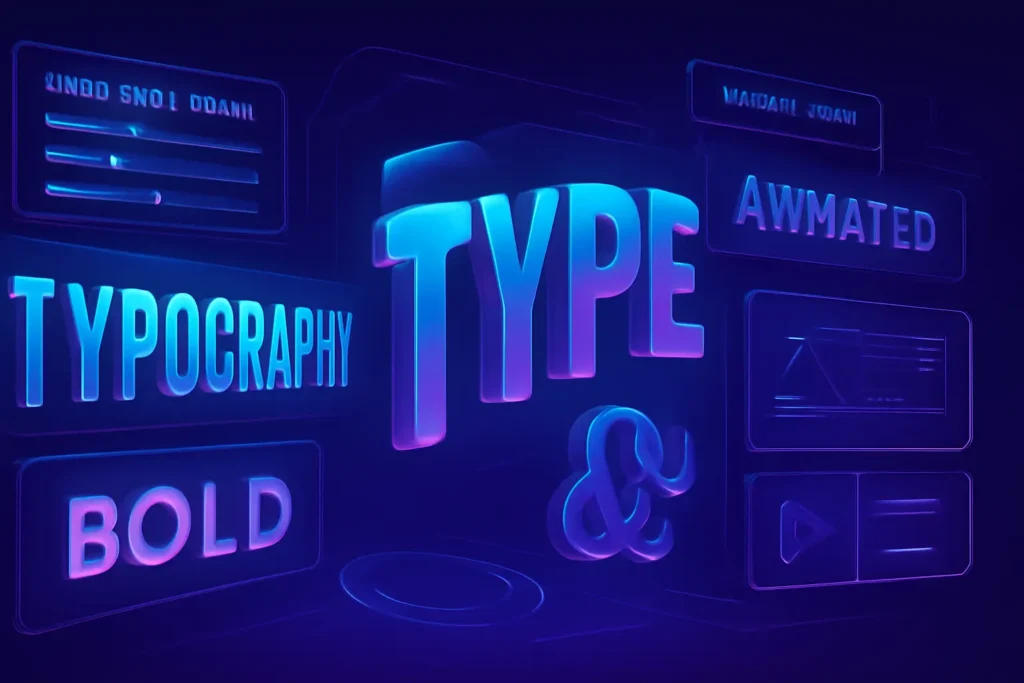
Advanced Typography and Variable Fonts
Typography has emerged as a dominant design element, offering both functional and expressive value.
Why typography matters in 2025:
Large, expressive type instantly captures attention
Variable fonts improve accessibility and performance across devices
Typography strengthens brand identity and message clarity
Brands are embracing bold, personality-driven font choices to distinguish themselves in crowded markets.
Immersive 3D Design and Motion Graphics
3D visuals, dynamic animations, and micro-interactions significantly enhance user engagement.
Applications of 3D and motion design:
Product representation and visualization
Website hero sections and interactive UI elements
Marketing campaigns requiring depth and storytelling
Explainer visuals for complex concepts
Movement enriches digital experiences and helps brands communicate more effectively.
Eco-Conscious and Sustainable Design Themes
Environmental responsibility is influencing both consumer expectations and brand identities. Designers are integrating sustainability-driven aesthetics into modern visual communications.
Characteristics of sustainable design:
Earth-inspired color palettes
Organic shapes and natural textures
Hand-drawn or imperfect elements to convey authenticity
This technique appeals strongly to Gen Z and eco-aware consumers.
Data-Driven and Personalized Visual Experiences
Brands are increasingly relying on data insights to refine their visual strategies.
Impact of data-informed design:
Enhances relevance by tailoring visuals to audience behavior
Improves performance on targeted ad campaigns
Supports content personalization across platforms
When creativity meets data, engagement significantly increases.
Techniques to Enhance Visual Impact in 2025
Strategic Application of Color Psychology
Color remains one of the most powerful tools in design. In 2025, brands are experimenting with modern palettes that evoke emotion and build identity. Graphic design works best when paired with strategic digital marketing tactics that amplify reach and engagement.
Trending palettes include:
Futuristic neon gradients
Warm, muted neutrals
Hybrid palettes blending digital and natural tones
Consistent color usage strengthens brand recognition and emotional appeal.
Superior Visual Hierarchy and Layout Structuring
A clear hierarchy ensures that users digest information in the order intended.
Professional layout techniques:
Utilizing contrast for emphasis
Applying F-pattern and Z-pattern reading flows
Maintaining consistent spacing and alignment
Using scale and proportion strategically
A strong composition elevates both clarity and aesthetic value.
Cohesive and Scalable Brand Identity Systems
Brand consistency is essential for credibility.
Components of an effective brand identity:
Unified typography and color systems
Consistent iconography and illustration styles
Repeatable design frameworks for all touchpoints
A clear brand voice reflected visually
A cohesive identity increases trust and recognition across all platforms.
Mobile-First Design Principles
With the majority of content consumed on mobile devices, visual optimization is critical.
Mobile-first considerations:
Legible typography on small screens
High-contrast visuals for clarity
Vertical orientation for social platforms
Optimized file sizes for fast loading
Mobile-friendly visuals significantly boost engagement.
Accessibility-Centered Design
Designing for everyone, not just the majority is a key standard in 2025.
Accessibility best practices:
High color contrast for readability
Clear alt text for images
Consistent heading structures
Scalable typography
Accessible design improves user experience and search engine performance.
Graphic Design Strategies That Strengthen Brand Engagement
Interactive Visuals and Micro-Animations
Interactive graphics guide users through digital experiences, increasing retention and encouraging deeper interaction.
User-Generated Visual Content Campaigns
UGC enhances authenticity and drives community engagement. Brands that empower audiences to create shareable visuals see higher reach and loyalty. Strong visuals are the backbone of personal branding, especially for those looking to become a successful content creator.
Data-Enhanced Infographics and Story Visuals
Infographics remain powerful tools for education and engagement, especially when paired with storytelling elements tailored to user interests. Infographics become more powerful when combined with strong narrative flow, highlighting the importance of storytelling in content marketing.
Platform-Specific Visual Optimization
Each platform has its own visual language. Effective graphic design also plays a key role in social media growth, which is essential for anyone aiming to become a high-demand social media manager in today’s competitive landscape.
Examples:
Instagram: Aesthetic layouts and storytelling carousels
TikTok: Bold, high-energy graphics
YouTube: Optimized thumbnails designed for high CTR
Understanding platform behavior is essential for maximizing performance.
Essential Graphic Design Tools for 2025
Adobe Creative Cloud + Firefly
Canva Pro AI
Figma & FigJam
Blender (3D)
Procreate & Sketchbook (illustration)
These tools streamline workflows and help designers produce innovative, professional visuals.
Common Design Pitfalls to Avoid
Over-dependence on AI-generated content
Overloading visuals with unnecessary elements
Inconsistent brand identity
Neglecting mobile optimization
Ignoring data and performance metrics
Avoiding these mistakes ensures polished, effective, and impactful designs.
Conclusion
Graphic design in 2025 is defined by intelligent tools, immersive visuals, and strategic creativity. Brands that embrace AI-assisted workflows, refined minimalism, strong typography, interactive design, and data-driven insights will stand out in an increasingly competitive marketplace.
By adopting these modern techniques, you can elevate your brand’s visual identity, improve user engagement, and build long-lasting connections with your audience.